Donate

Oregon Wing hosts stargazing event
Editor's note: Recently, Oregon Wing cadets were given the opportunity to experience an overnight trip to learn about aerospace technology, astronomy, and astrophotography. Capt. John Price, Oregon Wing Director of Aerospace Education, shared the story of how this engaging weekend came together. We retell it here to show how an idea becomes a meaningful experience - a combination of STEM learning and fun activities. We invite other AEOs and Wings to share their stories of events such as this for publication on our AE webpages.
The Dark Sky Tale
By Capt. John Price
In Oregon, east of the Cascade Mountain range, lies a high desert. There, it is sparsely populated and little light pollutes the evening skies. In this area you will find one of the world’s largest and darkest Dark Sky Sanctuaries, called the Oregon Outback. An opportunity was screaming at us to come and look at the stars; so a plan ensued. Fifty people attended this inaugural, two-night event - 21 Cadets, 15 Senior members, four astronomers, and 10 guests, -- a great turnout for a first-time event. Cadets in all Oregon squadrons were invited to the August event. Without the assistance of three groups - Junipers Reservoir RV Resort, Pine Mountain Observatory (PMO) and Lake Health District - the event could not have happened
THE VENUE
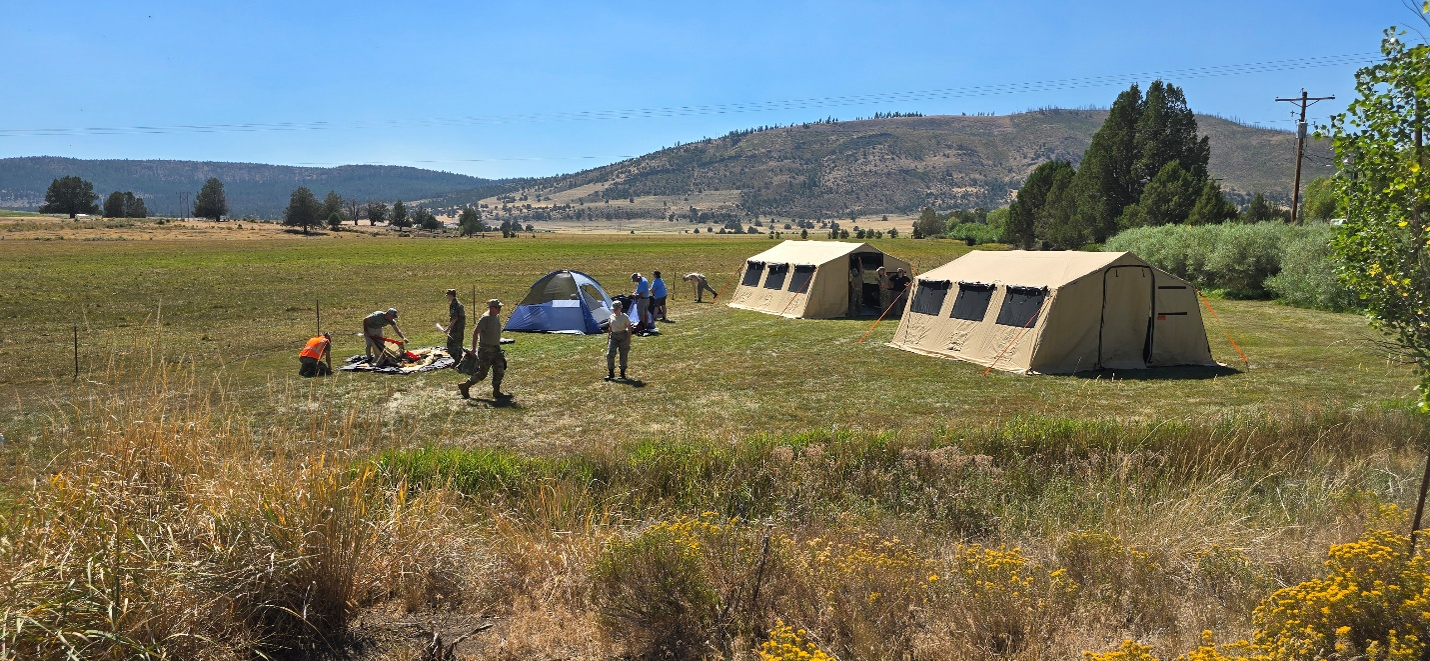
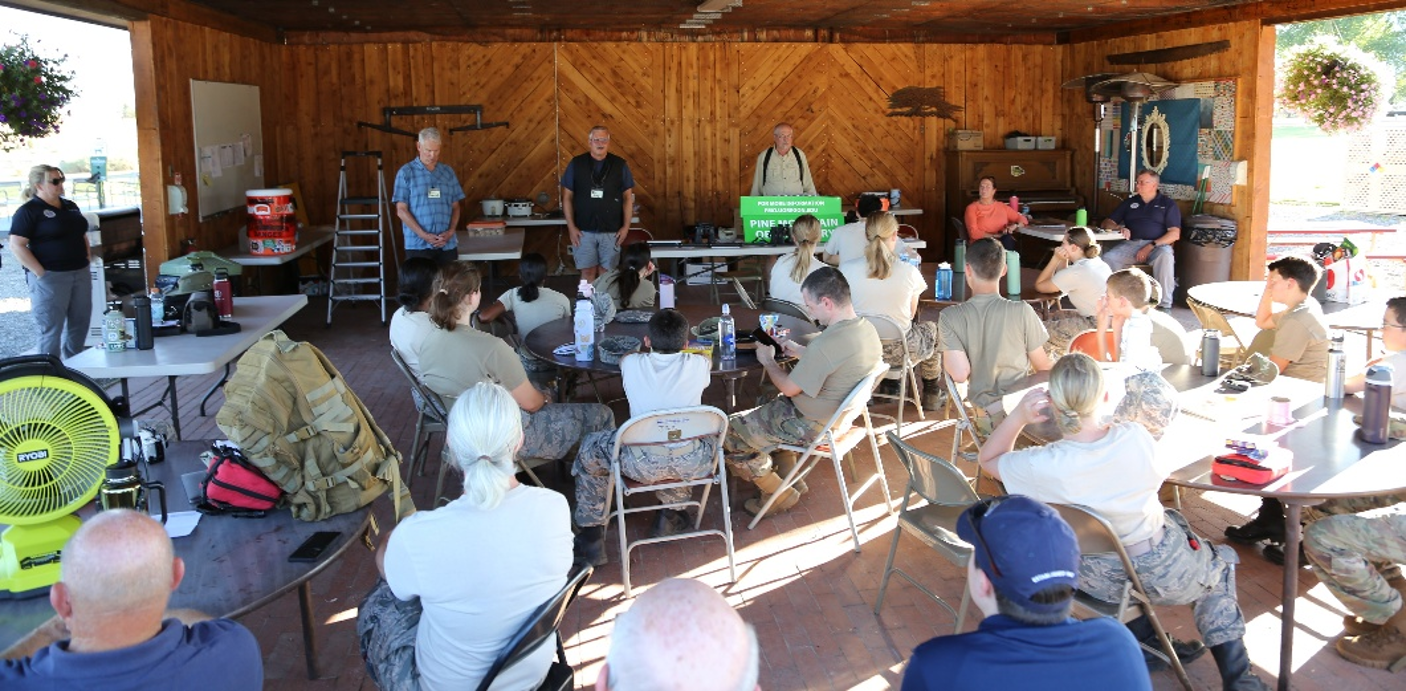
First, the venue needed to be found. A little west of Lakeview, Oregon, is Junipers Reservoir RV Resort, a facility that fit our needs. With a large grass area for tents, a pavilion for food service and workshops, restroom and shower facilities, and slots for RV campers, it was the perfect spot for our adventure.
THE EXPERTS
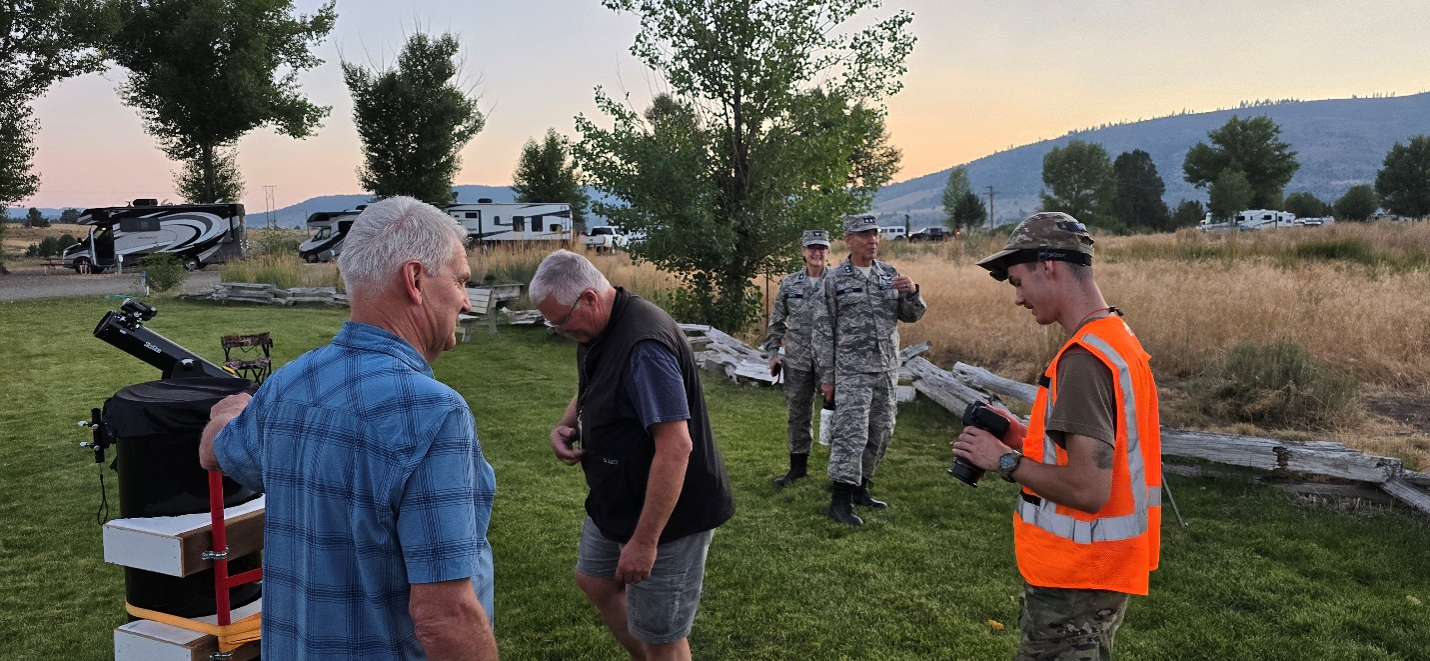
Next, we added astronomy experts We knocked on a lot of doors seeking astronomy support when finally, we knocked on the door of the Operations Manager of the Pine Mountain Observatory (PMO), Alton Lukin. He was ecstatic! In May of 2025, a huge thunderstorm washed away the road and power feed to the PMO. The PMO astronomers were eager to get in some good viewing (they are used to hosting Sky Watching Parties and having time using their multiple large telescopes). Bad luck for the Pine Mountain Observatory became our good luck as the PMO Operations Manager agreed to bring all of their “toys” and four astronomers to teach us about the night skies.
THE ACTIVITIES
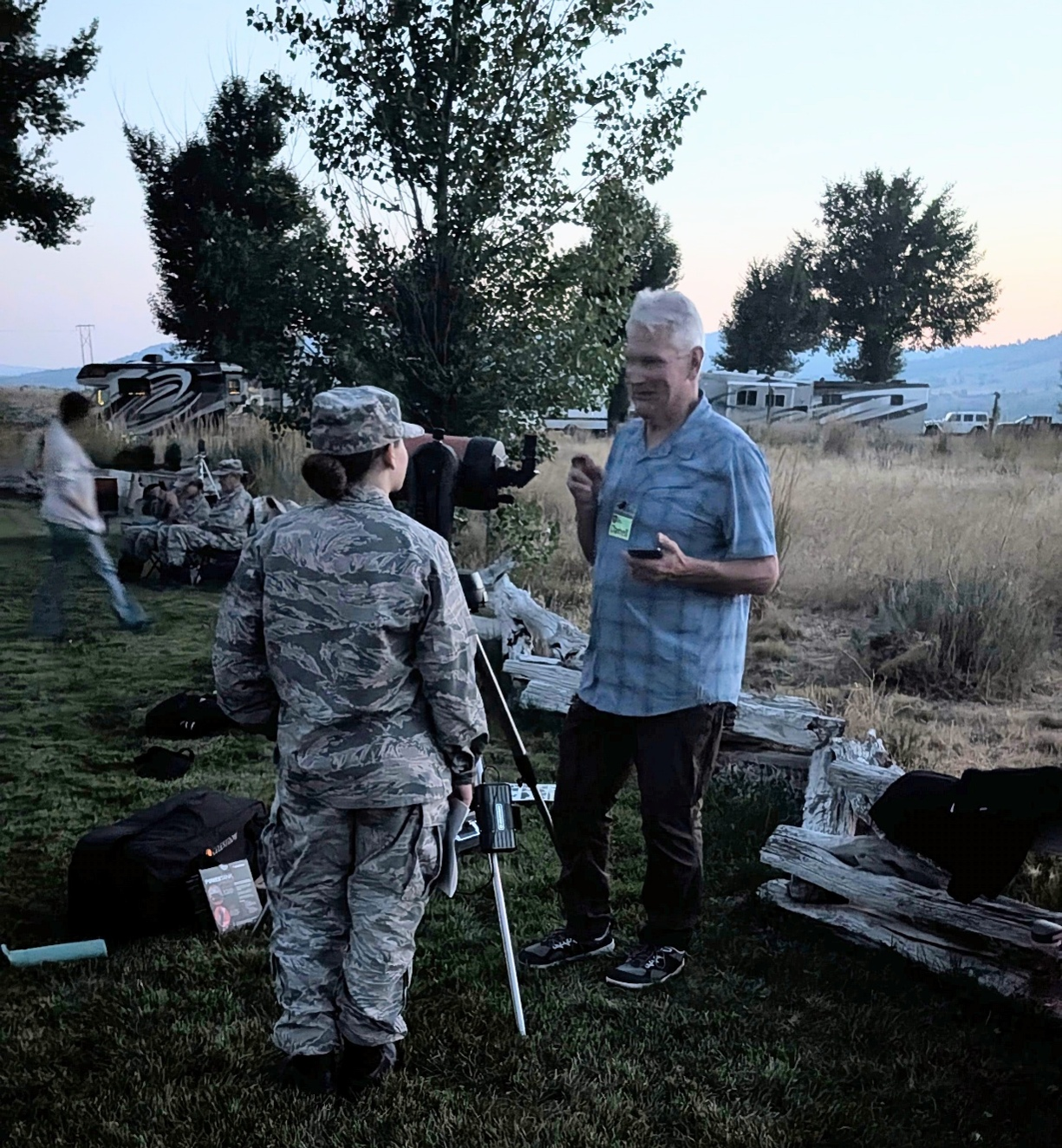
Since education of the night sky addresses one of the Civil Air Patrol STEM goals, two unique two-hour Night Sky Education sessions, one for each of the two weekend evenings, were planned. The Pine Mountain Observatory “toys” (multiple telescopes… a 20” behemoth Dobsonian, two 10” Dobsonians, a binocular telescope, and two solar telescopes) along with supporting educational materials were the foundation for each session.
A tracking telescope must be set at due North to keep a specific object in the telescope eyepiece. So, the Pine Mountain Observatory astronomers taught us how to navigate to the North Star - Polaris. The North Star is pointed to by the Big Dipper (Ursa Major). It is also the end of the handle of the Little Dipper (Ursa Minor).
(Did you know … in the bend of the handle of the Big Dipper, with our naked eye, we see two stars that are in reality 6 stars in total. It’s a twin star system, Mizar and Alcor! It is an interesting read, look them up.).
Three of the tracking telescopes kept the nebulas, galaxies, or the star clusters in the view finder as the astronomers discussed the object name and significance. We viewed many Messier [1] objects as well as unique interesting objects. Some of the named favorites though were the Swan Nebula, the Dumbbell Nebula, twin stars, and star clusters. We also accessed applications on our phones to learn about constellations like Stellarium in dark mode.
The naked eye viewing was astonishing. Constellation locations and stories were told, and a row of planets was admired. The Milky Way was popping out of the sky! Before this Dark Sky event, 60 percent of the participants had never seen the Milky Way.
NO TELESCOPE? NO PROBLEM!
The PMO astronomers discussed how using standard binoculars is a great and inexpensive way to start viewing and learning the cosmos. They recommend 7 to 8 power binoculars with around a 50mm front lens view. Add a tripod mount, and the binoculars used could then be higher in power. The larger the front lens of the binocular, the larger amount of light and detail received.
DAYTIME TELESCOPES
During the day, two Solar Telescopes were utilized to explore the sun. It was amazing to see the solar flares leaving the edges of the sun! Some participants were even able to see small sunspots which thrilled the astronomers. These guys love what they do!
Additional daytime activities included rotary wing aircraft flying for all participants (supervised by three rated sUAS Mission Pilots), and a ferocious Corn Hole tournament (the competition was great). Horseshoes were thrown. Card games were played. And thank goodness for the shade as the heat was on, humidity was low, and the air was thin.
Being part of this Dark Sky event was an amazing experience for all!
[1] Note: Charles Messier was an 18th century French astronomer. He published an astronomical catalogue consisting of 110 nebulae and star clusters, which came to be known as the Messier objects, referred to with the letter M and their number between 1 and 110.